

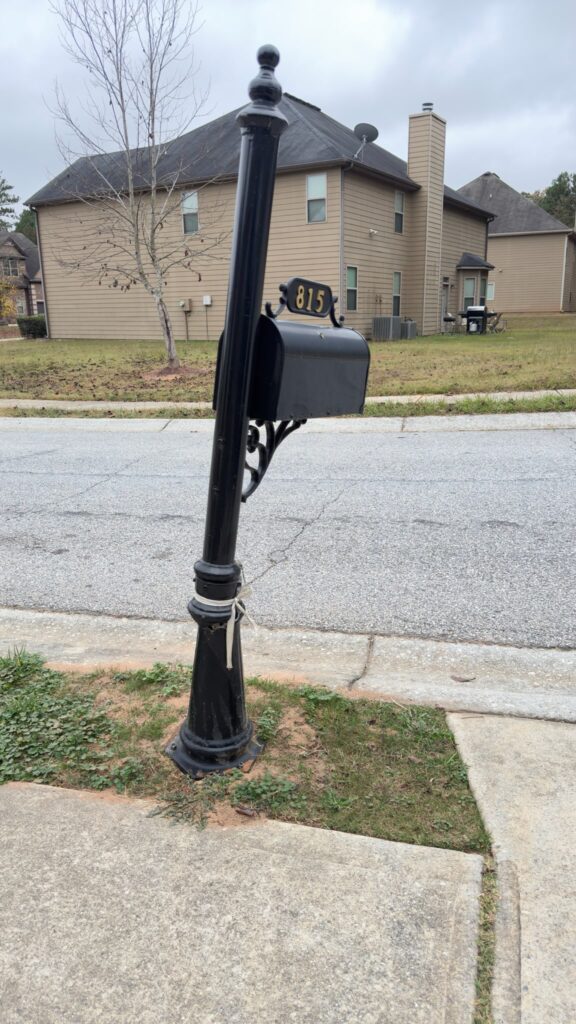
Replacing a Mailbox Post in Atlanta: When to Repair, When to Replace, and What Homeowners Should Know
Replacing a Mailbox Post in Atlanta: When to Repair, When to Replace, and What Homeowners Should Know
In metro Atlanta, a mailbox post does more than hold a mailbox. It sits at the edge of the roadway, endures intense sun, heavy rain, irrigation overspray, and the occasional bump from a vehicle, lawn equipment, or delivery truck. Over time, posts rot, lean, crack, rust, or loosen in the ground. When that happens, homeowners often ask a simple question: Can I just repair the post, or should I replace it?
The short answer: if the post is structurally compromised, leaning due to foundation failure, rotted at grade, cracked, severely corroded, or no longer meets neighborhood or postal requirements, replacement is usually the safer and longer-lasting option. In Atlanta’s climate, repairs that only address the visible damage often leave hidden deterioration behind.
Replacing a Mailbox Post Can Create Many Questions For Homeowners:
Can it be repaired?
How much will this cost?
What materials should I use?
What are the best options?
Does my HOA require a standard design?
Common Signs a Mailbox Post Needs Replacement
A few cosmetic issues can be repaired, but these symptoms usually point toward replacement rather than a simple fix:
| Sign | Why it matters |
|---|---|
| Post leans even after being straightened | The footing, surrounding soil, or lower section of the post may have failed. |
| Wood is soft, spongy, cracked, or split near ground level | Ground-contact rot is difficult to reverse and tends to spread. |
| Metal post shows deep rust, perforation, or severe corrosion | Loss of material thickness reduces structural strength. |
| Mailbox height or setback is incorrect after repeated adjustments | The installation may no longer meet practical roadway and delivery expectations. |
| Post was struck by a vehicle | Hidden cracking, bending, or footing damage is common. |
| HOA requires a specific post style that the existing post cannot match | Replacement is often the simplest path to compliance. |
Project Tip: If the damage is concentrated in the lower 6–12 inches of a wood post, replacement is usually more cost-effective than attempting to patch or sleeve the post. That section carries the highest moisture exposure and the greatest structural load.
Atlanta-Specific Causes of Mailbox Post Failure
Metro Atlanta’s environment creates a few predictable failure patterns:
- Moisture and rot at the soil line. Pressure-treated wood lasts longer than untreated wood, but constant wet-dry cycling, irrigation, mulch piled against the post, and poor drainage still shorten service life.
- Clay soils and movement. Expansive clay can shift seasonally, loosening posts and contributing to leaning.
- Sun exposure. UV radiation dries and cracks unsealed wood, allowing water to penetrate more easily.
- Vehicle contact. Many replacements occur after a mailbox is clipped by a car, truck, trailer, or landscaping equipment.
- HOA upgrades and neighborhood standardization. Communities frequently replace mismatched or aging posts to maintain a consistent streetscape.
Repair vs. Replace: A Practical Decision Guide
| Condition | Usually Repairable? | Usually Replace? |
|---|---|---|
| Loose fasteners, minor wobble, intact post | Yes | No |
| Mailbox detached from an otherwise sound post | Yes | No |
| Superficial paint or finish failure | Yes | No |
| Post leans because soil washed out around footing | Sometimes | Often, if footing or post is damaged |
| Wood rot at ground level | Rarely | Yes |
| Cracked or split structural member | Rarely | Yes |
| Bent or deeply corroded metal post | Rarely | Yes |
| Post struck by a vehicle | Unreliable | Yes |
For most homeowners, replacing a compromised post is the longer-lasting and lower-risk solution.
What a Proper Mailbox Post Replacement Involves
A durable installation is more than swapping one post for another.
- Verify location and neighborhood requirements. Before work begins, confirm HOA standards, community-approved post styles, and any local requirements that affect appearance or placement.
- Remove the existing post and inspect the footing area. After excavation, a contractor checks for rot, broken concrete, loose soil, and drainage issues that may have contributed to the failure.
- Set the new post to the correct height and alignment. Height, setback, and orientation matter for both curb appeal and mail delivery practicality. A replacement should be installed plumb, aligned with neighboring boxes when appropriate, and positioned consistently with community standards.
- Stabilize the installation. Depending on the post type and soil conditions, the footing may use concrete, compacted aggregate, or another approved method. The goal is a stable post that resists movement without creating drainage problems.
- Install or transfer the mailbox and hardware. This includes mounting brackets, address numbers, decorative elements, and any newspaper holder or accessory approved by the HOA.
- Finish and protect the post. Wood posts benefit from sealing or painting after installation. Metal posts should receive appropriate corrosion protection, especially at cut edges and fastener locations.
HOA Considerations: Don’t Replace the Wrong Post
One of the most common headaches is replacing a damaged post with a style the HOA does not allow.
Before installation, verify:
- Approved post design, dimensions, and color.
- Mailbox model requirements.
- Address-number specifications.
- Decorative bracket or finial rules.
- Whether grouped mailbox standards apply in your section of the neighborhood.
For communities with strict standards, using an installer familiar with HOA requirements can prevent costly rework.
When to Call a Professional
Consider professional replacement when:
- The post is leaning or loose after attempted straightening.
- Rot or corrosion is visible near ground level.
- The post was struck by a vehicle.
- You need to match an HOA-approved style.
- Utilities, drainage, or concrete removal complicate the job.
- You want the new installation aligned and finished to neighborhood standards.
Professional installers also tend to carry the correct hardware, concrete-removal tools, alignment equipment, and knowledge of local neighborhood requirements that make the finished result look intentional rather than patched together.
Typical Timeline
For a straightforward single-post replacement, many projects can be completed in a single visit once utility marking and HOA approvals are in place. Custom posts, decorative systems, or community-wide replacements may require additional lead time for fabrication and coordination.
The Bottom Line for Atlanta Homeowners
For many mailbox problems, the post itself—not the mailbox—is the weak link. In metro Atlanta, rot at the soil line, leaning due to footing or soil movement, corrosion, and impact damage are the clearest indicators that replacement is warranted. A proper replacement addresses the cause of the failure, installs the new post at the correct height and alignment, and matches HOA requirements where applicable.
If your post is structurally compromised, replacing it now is usually cheaper than repeated repairs, prevents a crooked or unsafe installation from becoming a bigger problem, and restores curb appeal with a cleaner, longer-lasting result.
Mailbox Project provides mailbox post replacement and installation services throughout the Atlanta area and entire Southeast, including HOA-compliant replacements, standard residential posts, decorative post systems, and full mailbox/post upgrades designed for Atlanta’s climate and neighborhood requirements.
